
Questions, Answered.
-
No.
You need English functional enough to handle clinical scenarios and understand interview questions.
That's it.
Most of our clients speak strong conversational English—they just don't know how American dentists communicate in clinical and professional contexts.
That's what we teach. The six-band rubric we use isn't about perfection. It's about fluency, lexis, grammar accuracy, pronunciation, register, and interview presence.
Those are teachable skills.
-
Express (8 weeks, $1,997 or two payments of $1,074.50) targets CAAPID interview readiness.
That's Layer 1 of the American Dental Fluency methodology. The methodology is comprised of four layers:
CAAPID Interview Express
Clinical Communication
Professional Integration
Patient Cultural Bridging
If you want to work on clinical English or professional collaboration after CAAPID, we will have those programs soon.
-
If your CAAPID interview is in the next 12 weeks: yes.
Eight weeks is structured for the dentist who already speaks English and has clinical depth—you just need the interview layer.
We compress the timeline by targeting exactly what CAAPID scores: fluency, lexical range, grammar, pronunciation clarity, clinical register, and interview presence. No filler.
If your interview is 16+ weeks away, we can move at a slower pace with deeper clinical work.
The timeline is flexible; content is locked.
-
Yes.
We work with foreign-trained dentists from any Spanish-speaking region (Mexico, Central America, South America, Spain, Caribbean) and from non-Spanish backgrounds (Southeast Asia, Middle East, Africa, Europe, etc.).
Sessions are held via Zoom. The only requirement: you commit to my schedule, not the reverse.
Most of our students are in the US already, but we've worked with dentists in Colombia, Mexico, and Central America who are preparing from their home office.
Time zones are manageable if you're flexible.
-
Layer 1: CAAPID Interview Mastery — the 30–45 minute live panel. Word stress, fluency, confidence, body language, sentence structures, appropriateness. This is the diagnostic most dentists need first.
Layer 2: Clinical Communication — patient interactions, treatment explanations, chairside language, chart documentation, peer communication in clinical settings.
Layer 3: Professional Integration — team meetings, continuing education, professional standards, networking, leadership language.
Layer 4: Patient Cultural Bridging — competence, bilingual code-switching, patient communication in Spanish and English, running an American dental workflow with a bilingual patient base.
[Learn more →] Links to /faq#four-layers
-
Depends on what you're asking.
The interview itself: 30–45 minutes. One sitting.
Getting ready for it: Most foreign-trained dentists need 4–8 weeks of focused work to feel confident. Here's why:
Weeks 1–2: You identify your interference patterns (the Spanish L1 habits affecting your English under pressure). This is where you see the fastest improvement — usually 3–5 points on a mock interview.
Weeks 3–4: You drill the corrections until they feel natural, not forced. Another 3–5 point jump.
Weeks 5–8: You practice under pressure (mock interviews, follow-up questions, staying calm when you don't understand a prompt).
-
Yes. We work with foreign-trained dentists from any Spanish-speaking region (Mexico, Central America, South America, Spain, Caribbean) and from non-Spanish backgrounds (Southeast Asia, Middle East, Africa, Europe, etc.).
The diagnostic shifts based on your L1 (first language). If your first language is Mandarin, your interference pattern is different than if it's Spanish. We adjust the Layer focus accordingly.
Most of our clients are from Latin America, so our templates are built around Spanish L1 transfer patterns. But we work with anyone in the CAAPID pipeline.
-
Item descriptionAn accent isn't the problem. Unclear pronunciation is.
We focus on the 8–12 phonemes that actually matter for CAAPID: the sounds your first language doesn't have.
For Spanish speakers, that's /θ/ (th in "think"), /v/ vs /b/ distinction, /h/ in initial position, and vowel reduction in unstressed syllables.
-
Item descriptionYes.
This is actually where we excel.
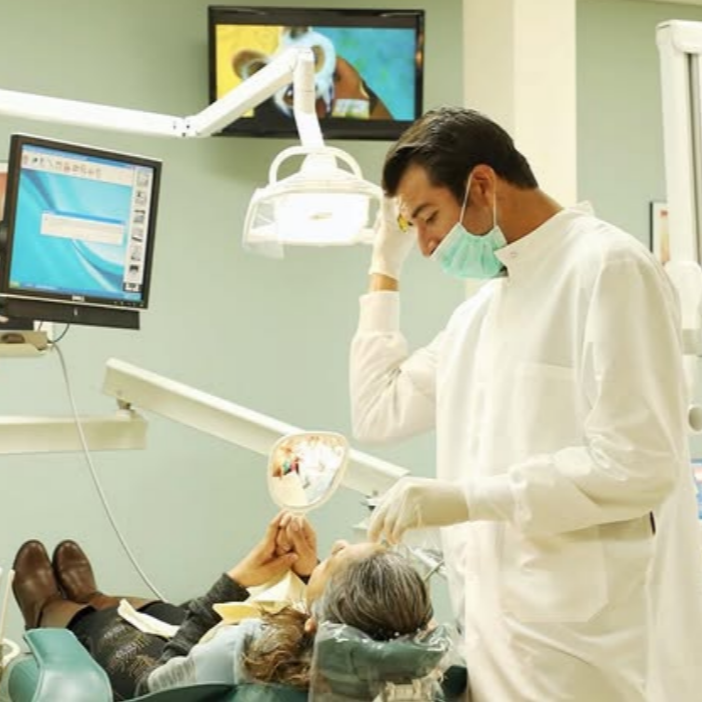
When you fail once, you know exactly what went wrong—or you think you do. We run a diagnostic (free 20-minute audit) that pinpoints which of the six bands actually cost you the interview: fluency, lexical range, grammar, pronunciation, register, or presence.
-
We stand behind the work.
If you don't pass after completing the full 16-session program, we'll do a retake debrief at no cost to identify what shifted and what didn't.
Most of our students pass on their first attempt with us. The ones who don't usually pass on the second attempt because we know exactly which band to target.
Bring us the interview feedback and we'll rebuild that specific skill.
-
You're ready when:
You have your DDS/DMD degree recognized (or in the process of recognition)
You can handle clinical scenarios in English without translating in your head
You're applying to a specific US program with a known interview date
Don't wait until your English is "perfect"—nobody's is.
Book a free 20-minute audit and we'll give you an honest read on where you stand and whether now is the right time.
-
Then we need to be honest: 8 weeks won't work.
CAAPID isn't something you can cram into coaching sessions alone. The sessions are the structure; the homework is where the skill builds. If you have 2–3 hours/week for homework, Express works.
If not, we either extend the timeline to 12 weeks (lighter weekly load) or you wait until your schedule opens up. We'd rather be honest now than have you stressed in week 4.
-
Here’s how it works:
Step 1: Complete the 19-question CAAPID Assessment, it takes 10 minutes.
Step 2: I’ll send you an email with a link to my calendar. Just click it and book your free 40-minute CAAPID Interview Audit. We’ll ask you a real CAAPID question, score you across the six bands, and give you honest feedback on where you stand.
Step 3: We’ll talk about whether Express is the right fit for you and what timeline makes sense based on your interview date.
Step 4: If you’re ready to move forward, we’ll get you scheduled for your first session within the week.
-
TOEFL (Test of English as a Foreign Language) measures general English proficiency—listening, reading, writing, speaking. Score requirement varies by program (usually 80–100 iBT).
Kira Talent is a video-recorded interview used by some US dental schools for initial screening; it's asynchronous and you have limited time to answer.
CAAPID (Comparative Dental Auxiliary and Peer Interview Design) is a live 30–45 minute interview for advanced standing applicants.
We coach for CAAPID specifically, but the communication skills transfer across all three.
-
Partially. If you're applying to a US dental school DDS program from abroad, you'll face Kira Talent interviews (video-recorded, asynchronous) and potentially admission interviews (live, but different format than CAAPID).
The communication principles we teach transfer—clarity, register, interview presence—but Express is built for CAAPID structure specifically. We can discuss whether our coaching applies to your timeline and interview format.
Reach out.
-
The assessment shifts based on your L1 (first language).
If your first language is Mandarin, your interference pattern is different than if it's Spanish. We adjust the Layer focus accordingly.
Most of our clients are from Latin America, so our templates are built around Spanish L1 transfer patterns.
But we work with anyone in the CAAPID pipeline—the methodology adapts.
-
Yes
Dentalengua serves foreign-trained dentists, but we also coach dental hygienists, therapists, and other specialists preparing for US licensure interviews.
The communication principles are the same; the clinical context shifts. If you're a dental professional (not a dentist) preparing for an interview, let's talk.
Book an audit and we'll scope whether Express fits or if we need a customized approach.
-
The CAAPID interview is the gate. Once you're in the program, you'll face clinical rotations where American communication patterns shift again—patient communication, clinical team collaboration, professional integration.
If you want to continue developing those skills, we offer Layer 2 (Clinical Communication, 12 weeks) and Layer 3 (Professional Integration, 16 weeks). But Express is designed to get you through the interview. What comes next is your call.